
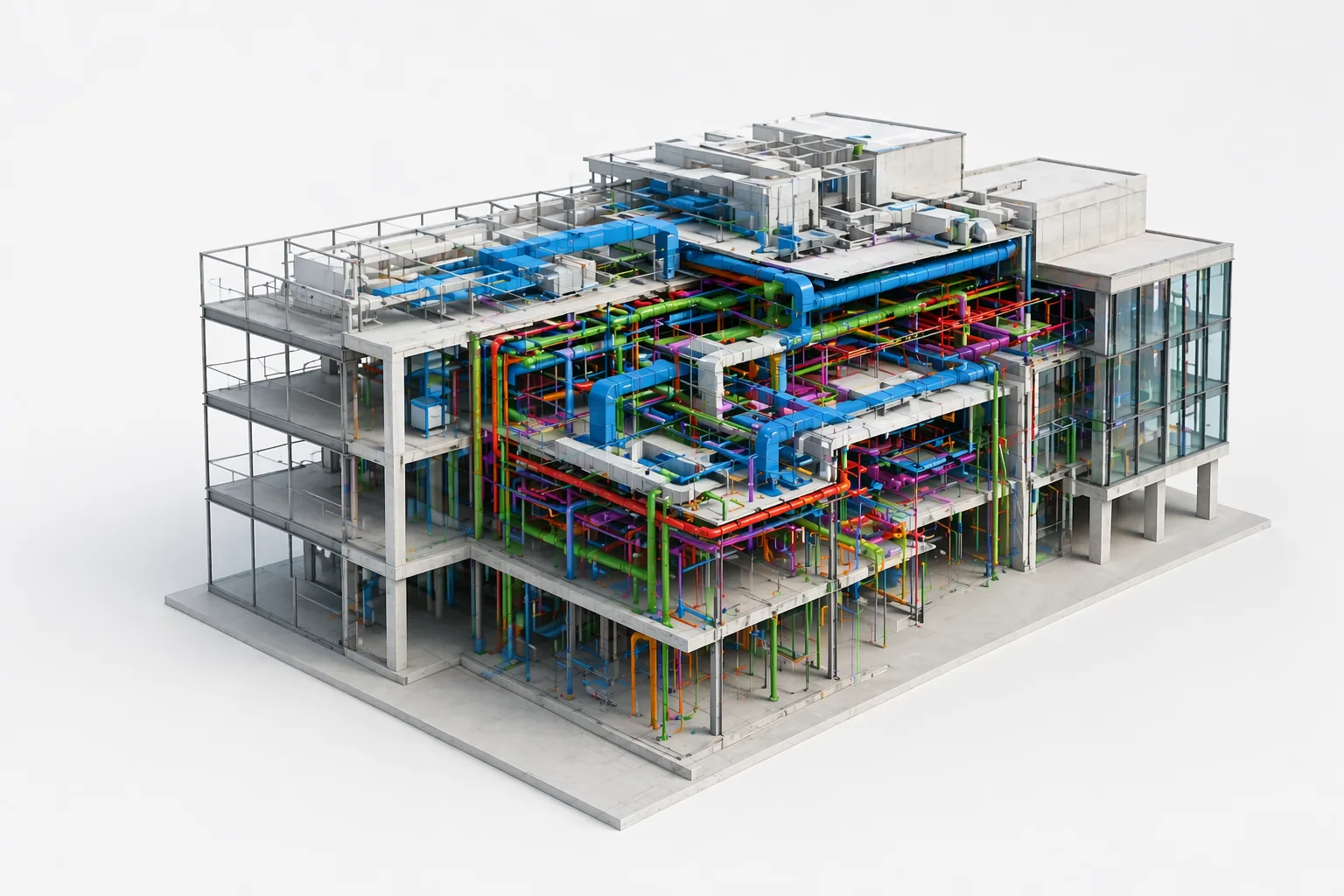
Industrial energy engineering, from assessment to delivery.
Amanos combines technical feasibility, energy systems engineering and EPC project delivery for industrial energy transformation. We assess waste heat recovery and industrial heat pump integration against the operating needs of your facility.
Project development and delivery in nine stages.
Industrial energy efficiency and electrification projects need an evidence-led sequence of decisions. Each stage provides inputs for the next; deliverables, responsibilities and acceptance criteria are defined for the agreed project scope.
Heat pump and waste heat technologies · Industrial and manufacturing applications · Energy-led MEP for commercial buildings
Process Analysis
Review process flows, temperatures, operating hours and energy consumption. Deliverable: a baseline assessment, data gaps and integration constraints.
Techno-Economic Feasibility
Compare technical options against energy tariffs and investment assumptions. Deliverable: CAPEX/OPEX scenarios, feasibility and payback assessment; financial outcomes depend on these assumptions.
Energy Analysis
Develop energy and mass balances, with exergy analysis where appropriate. Deliverable: baseline consumption, heating and cooling duties, and energy optimization priorities.
Concept Design
Match waste heat sources to process demand and assess electrification options. Deliverable: system architecture, preliminary sizing and an integration concept.
Detailed Engineering
Prepare P&IDs and mechanical, electrical and controls designs within the agreed scope. Deliverable: equipment specifications, installation drawings and defined system interfaces.
Manufacturing
Produce project equipment to the engineering requirements. Deliverable: equipment, technical documentation and quality control records within the agreed manufacturing scope.
Installation
Integrate mechanical, electrical and automation connections with the existing facility. Deliverable: site installation and pre-commissioning checks, with shutdown requirements coordinated with the operator.
Commissioning
Carry out testing, calibration and operating adjustments against agreed criteria. Deliverable: commissioning records and an assessment of measured operating conditions.
Performance Optimization
Compare operating data with design and baseline conditions. Deliverable: improvement recommendations and a monitoring plan within the agreed scope; outcomes depend on the load profile.
What this process delivers.
Evidence-Led Investment Decisions
Compare alternatives for the same process duty using explicit energy price and operating assumptions.
Energy Optimization Priorities
Use site assessment and energy balances to identify where consumption can be reduced and under which conditions.
Carbon Impact Assessment
Evaluate fuel and electricity scenarios using stated emissions factors; emissions reductions are not guaranteed.
Integrated Project Delivery
Define engineering, procurement and site interfaces. EPC responsibilities follow the agreed contractual scope.
Integration with Your Facility
Consider capacity, available space, connections and potential expansion needs together.
An Operational Roadmap
Define post-commissioning monitoring, service and optimization requirements within a project-specific scope.
Industrial Energy Project Questions
What information is needed for a feasibility assessment?
Facility and process type, energy bills, fuel and electricity consumption, operating hours, temperature levels and existing equipment information provide a useful starting point. Any missing measurements are identified during the initial assessment.
How are waste heat recovery and heat pump integration assessed?
Source temperature, flow and availability are compared with the process temperature and load profile. Existing connections, electrical infrastructure and shutdown constraints also inform the integration design.
How are energy savings and payback assessed?
Existing consumption provides the baseline. The proposed system is modelled for equivalent production or operating conditions using stated energy tariffs, investment and operating cost assumptions. Actual results depend on facility conditions.
Does EPC mean the same delivery scope on every project?
No. Engineering, equipment procurement, manufacturing, mechanical and electrical integration, and commissioning responsibilities are defined in the project agreement. Existing facility interfaces and customer responsibilities are specified separately.
Let’s assess your industrial energy project.
Share your facility type, process requirements, current energy consumption, temperatures and operating hours. We can use the available information to define the scope of a technical feasibility assessment.